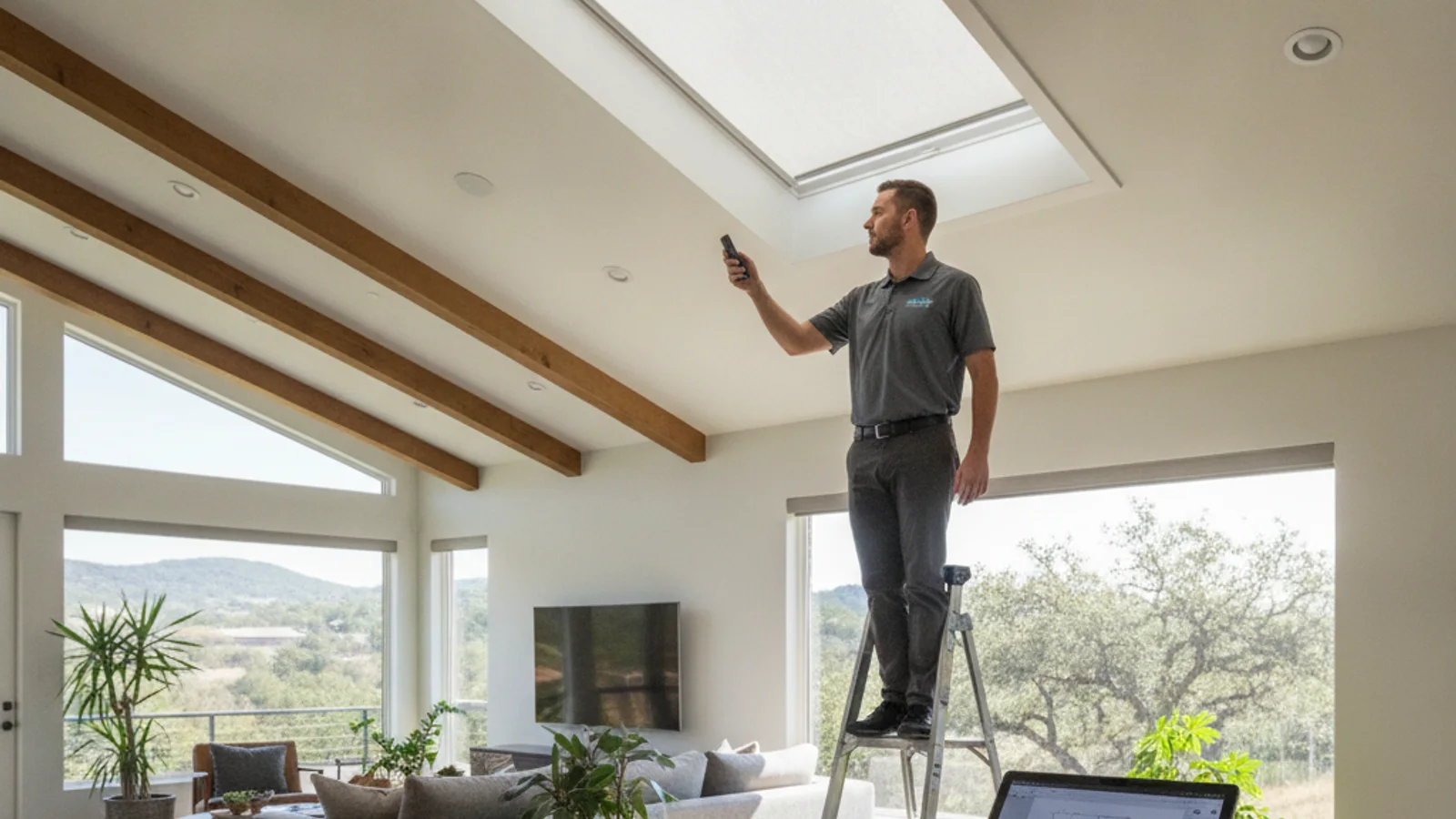
Manual skylight blinds and shades cost less upfront than motorized ones, and the total also depends on skylight size, fabric type, and whether the shade is retrofit onto an existing unit or added at install time. There’s no single sticker price for this category, but the factors that move it are consistent enough to plan around before getting a quote.
What moves the number most
Three things matter more than anything else: manual versus motorized or remote control, the fabric choice between single-cell, blackout, or solar-screen material, and how many units the project covers. A single manual shade on a small skylight sits at the low end of the range. A multi-unit, motorized, blackout-fabric project sits considerably higher. Get a written, itemized quote so it’s clear which of these factors is driving the number for your specific project rather than guessing from a general range.
Retrofit cost vs. install-time cost
Adding shades to an existing skylight sometimes costs more than specifying them at the same time as a new skylight install, because of frame compatibility. Some older or nonstandard skylight frames need an adapter or additional hardware to accept a shade that wasn’t part of the original spec, which adds labor and material cost that a same-time install avoids entirely. If you’re planning a new skylight and think you might want shades eventually, it’s worth pricing them together upfront.
Why this pays for itself functionally
Austin’s residential skylight energy code caps SHGC at 0.28, with an exclusion allowance up to 0.30, which means even a fully code-compliant skylight still lets in some solar heat. Shading is a real, functional supplement to that code minimum, not a nice-to-have. Skylight glazing and SHGC for Austin heat explains what those code numbers actually mean for heat gain in a room. This post isn’t going to claim a specific dollar savings figure, since that depends on too many variables to state honestly as a blanket number, but less afternoon glare and heat load in a bright, sun-exposed room is a real, tangible benefit regardless of the exact number on an electric bill.
Comparing this cost against doing nothing
An unshaded skylight in a bright, hot room isn’t free just because you skip the shade line item. The room runs hotter and glarier in the afternoon, which is a real comfort cost even without a fabricated dollar figure attached to it. Weighing shade cost against “doing nothing” isn’t really a fair comparison, since doing nothing has its own cost, just one that shows up as discomfort rather than a line on an invoice.
What to ask a contractor to itemize
Ask for skylight blinds or shades to be broken out as their own line item, separate from the base skylight or solar tube installation cost. That separation is what lets you compare quotes fairly and decide whether to add shades now or later without the number getting buried inside a larger total. What happens during a skylight installation quote covers what a clear, itemized estimate should look like more broadly.
Are motorized skylight shades much more expensive than manual?
Motorized units generally cost more than manual ones, given the added mechanism and remote or app control, though the exact gap depends on the specific product line and how many units are involved.
Can shades be added later instead of at install time?
Yes, in most cases, though it’s worth confirming frame compatibility with a specific unit before assuming a retrofit will be as simple as an at-install-time addition.
Does shade fabric type change the price much?
Yes. Blackout and solar-screen fabrics typically cost more than a basic light-filtering fabric, and the difference scales with the number of units in a project.
Getting a clear, itemized quote
Bright Sky ATX connects Austin homeowners with experienced, insured local crews for skylight blinds and shades and skylight installation. Call (737) 477-8898 for a free estimate.