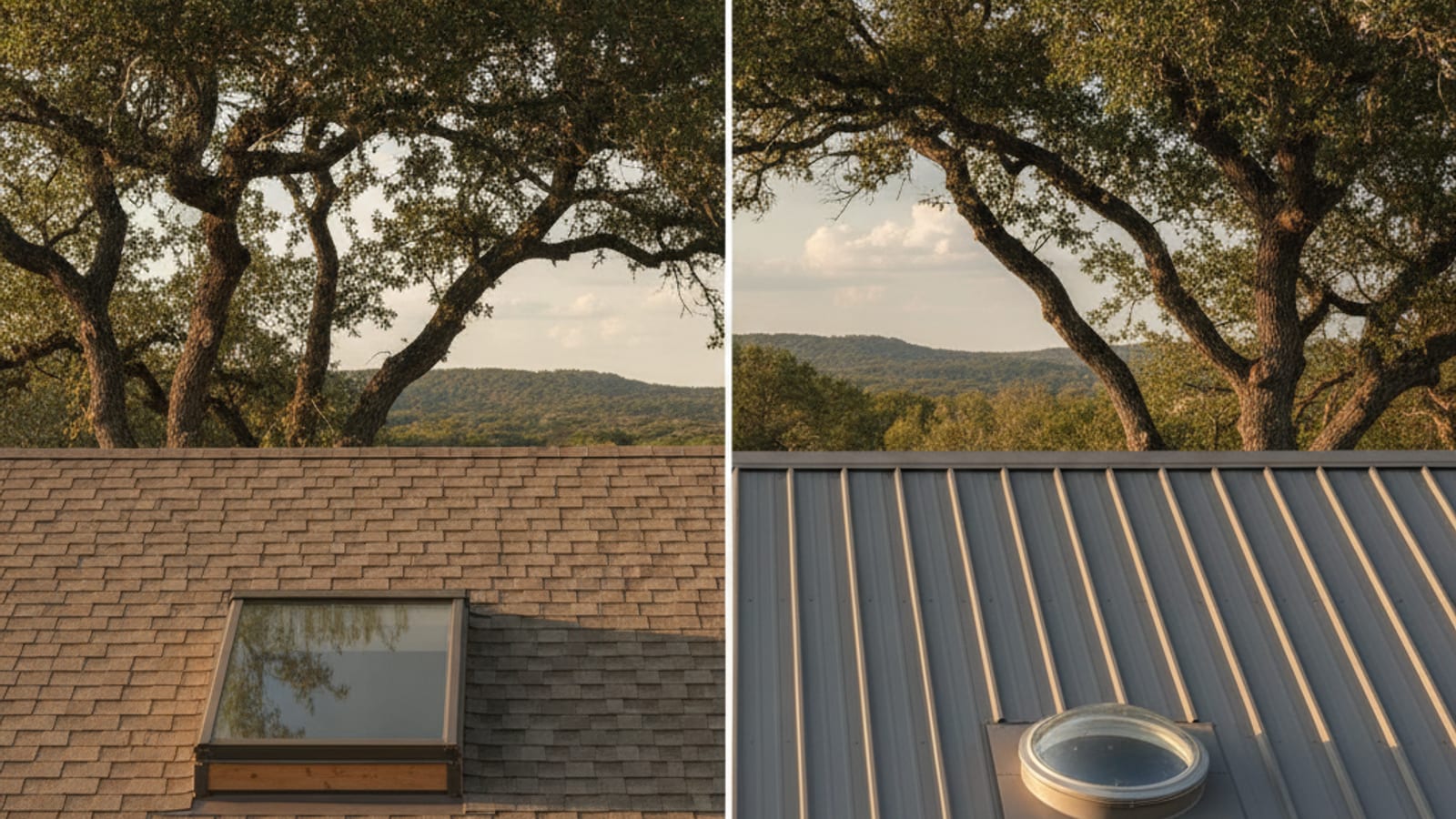
If your room is small, windowless, and served by an accessible attic, a solar tube is almost always the better fit. If you want a real view of the sky, extra ventilation, or you’re lighting a vaulted living room, a skylight is worth the extra cost and disruption. That’s the short version. The long version depends on your roof, your room, and your budget, and both products get lumped together online even though they solve different problems.
What each product actually is
A skylight is a fixed pane or vented window set into the roof deck, usually over a light shaft that opens into the room below. It brings a direct view of the sky, moving clouds, and in a vented model, fresh air.
A solar tube, sometimes called a sun tunnel or tubular skylight, is a small rooftop dome connected to a reflective metal tube that runs through the attic and ends in a diffuser at the ceiling. There’s no direct sky view. What you get instead is soft, even daylight, closer to a light fixture than a window. Homeowners who’ve lived with one often describe it as “like a window on the ceiling,” and more than one has admitted guests try to switch it off before they leave the room, not realizing it’s not electric.
Cost compared
Prices vary by roof type, tube length, and whether electrical work is involved, so treat these as planning ranges rather than a quote. An experienced local installer will confirm exact numbers for your roof.
| Solar tube | Skylight | |
|---|---|---|
| Typical install cost | Lower, often a single-day job | Higher, more materials and labor |
| Install time | Hours, minimal interior work | A full day or more, drywall and framing possible |
| Typical rooms | Bathrooms, hallways, closets, small kitchens | Living rooms, vaulted ceilings, kitchens with room to spare |
| Venting option | No | Yes, on vented models |
| Blinds or shades | Rarely needed | Common add-on for glare and heat |
| Glass replacement risk | Low, acrylic dome is durable and cheap to swap | Higher, larger glass unit costs more to replace |
For either product, Bright Sky ATX connects you with experienced, insured local crews who quote based on your actual roof and room, not a generic online estimate.
Light output and feel
A skylight gives you direct, sometimes intense light, plus a real view of sky and treetops. It can also mean glare and heat gain during a Central Texas summer afternoon. A solar tube diffuses that same sunlight through a reflective tube, so the light spreads evenly across a smaller room without a hot spot on the floor. In a large, open living room, a single tube often disappoints because the diffuser can only push out so many lumens. In a bathroom, hallway, or interior closet, that same tube can make the room feel like it has a window it never had.
Which Austin roofs suit which
Most Austin tract housing sits at a 4:12 or 6:12 pitch, the easiest range for either product. Central Austin’s older mid-century homes often run lower slopes, which favors curb-mounted units and works fine for both skylights and tubes. Hill Country custom builds run steeper, commonly 7/12 to 9/12, and some West Lake Hills homes go as steep as 12/12. On those roofs, a solar tube’s small rooftop penetration is often the easier install, while a full skylight may need more framing and harness work for the crew.
Heat gain in an Austin summer
Austin sits in Climate Zone 2, and the city’s residential energy code sets a maximum solar heat gain coefficient of 0.28 for skylights, with an allowance up to 0.30, plus a U-factor cap of 0.60. Those code numbers exist because a badly specified skylight can turn a room into a greenhouse by July. A solar tube’s small dome lets in far less total heat gain simply because the glazed area is a fraction of a skylight’s size, which is part of why tubes are the lower-heat option for a hot, sun-heavy room. Austin averages roughly 2,665 hours of sunshine a year across about 115 mainly clear days, so heat gain isn’t a minor detail here, it’s a year-round design factor.
Install disruption
A solar tube install typically finishes in a matter of hours with almost no interior mess, since the tube runs through existing attic space and the ceiling opening is small. A skylight, especially one added to a room that never had one, usually means opening the ceiling for a light shaft, patching drywall, and sometimes reworking insulation and roof framing around the new opening. If your home is occupied and you want the least disruption, that difference matters as much as the price tag.
Is a solar tube cheaper than a skylight?
In most cases, yes. A solar tube generally costs less to install than a comparable skylight, mainly because the rooftop opening is smaller and there’s little to no interior framing or drywall work involved.
Do solar tubes work on cloudy days?
They still bring in usable daylight on an overcast day, just less of it than under a clear Austin sky. They won’t replace a light fixture at night or on a heavily overcast day, but most owners find the daytime brightness holds up better than expected.
Can you put a solar tube in a two-story house?
Yes, as long as there’s a workable path from the roof to the room below, though a longer tube run through a second-story ceiling cavity can mean a bit more light loss than a single-story install. An installer can walk your attic and tell you quickly whether the run is straightforward.
Which adds more home value?
A well-placed skylight in a main living space tends to read as a bigger visual upgrade to buyers and appraisers, since it’s a permanent architectural feature with a sky view. A solar tube installation adds real comfort and daylight, particularly in a dark interior room, but it’s a smaller, less visible upgrade on a listing sheet.
Making the call
If you’re staring at a dark hallway, windowless bathroom, or small interior kitchen, start with a sun tunnel installation quote before you assume a full skylight is the only fix. If you’re lighting a vaulted great room or want the option to vent hot air out through the roof, a skylight is the product built for that job. Either way, Bright Sky ATX connects you with experienced, insured local installers who can walk your specific roof and room and tell you honestly which product fits. Call (737) 477-8898 for a free estimate.